After dental implant surgery, the implant post sits in direct contact with the jawbone and needs undisturbed time to fuse a process called osseointegration that takes several weeks to complete. What you eat during this period affects whether that fusion holds or fails. Hard foods fracture the blood clot at the surgical site. Sticky ones pull on soft tissue before it’s closed. Hot liquids increase bleeding. The restriction isn’t about comfort alone; it’s about protecting a healing interface that can’t be seen or felt from outside.
According to Dr. Namratha Chandrahari, Implantologist in Banjara Hills, “the first 72 hours after implant placement are the most critical any mechanical disturbance to the clot during that window sets back healing more than most patients realise.”
Unsure what's safe to eat after your implant procedure?
Book AppointmentWhich Foods Cause the Most Problems After Implant Surgery?
Not everything soft is safe, and not everything hard causes immediate damage but some categories consistently create complications across patients.
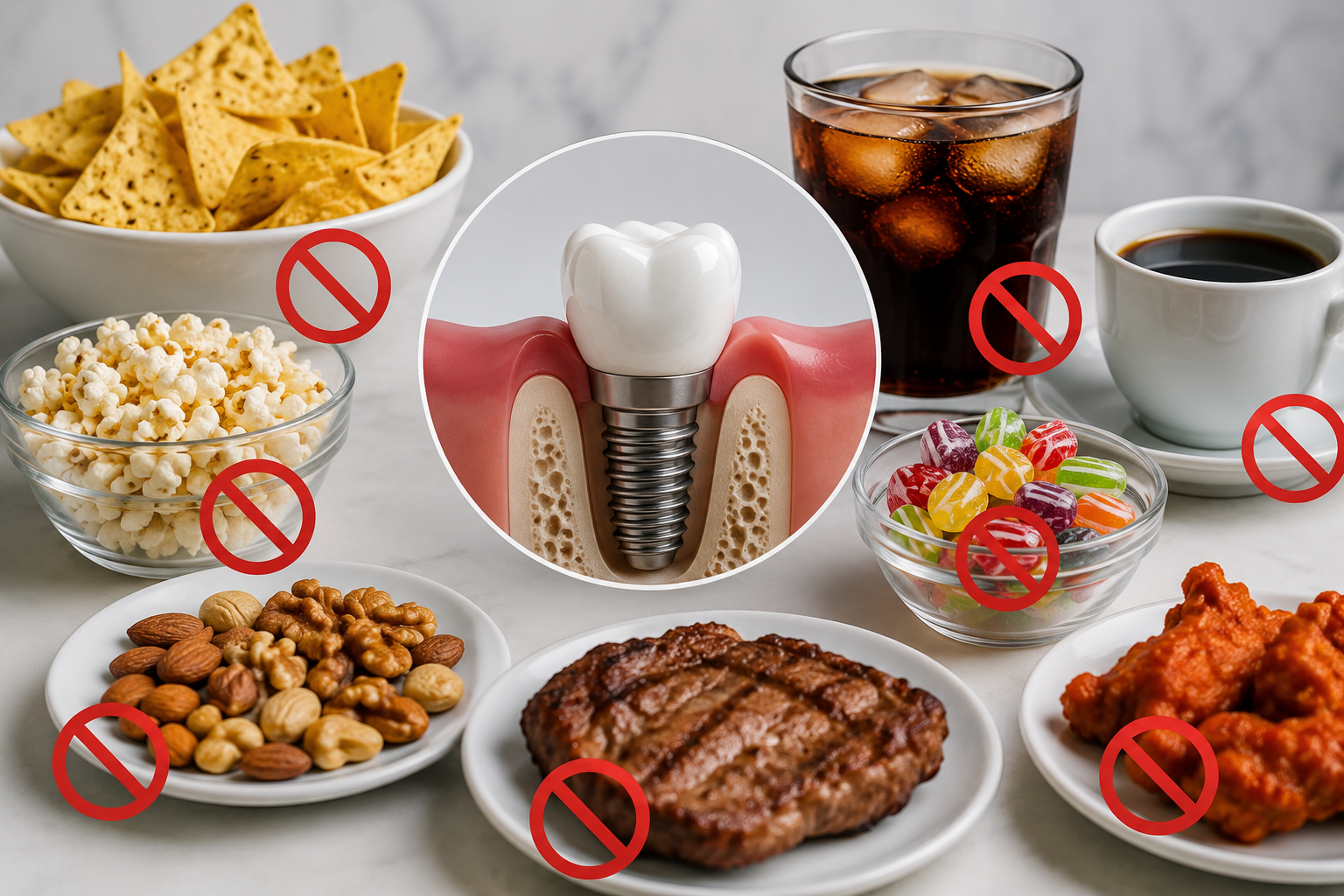
Hard and crunchy foods are the most obvious offenders. Nuts, raw carrots, toast crusts, papadums, anything that needs real bite force these put direct pressure on the implant site before the bone has started integrating around the post. Even biting down firmly on the wrong side can shift an implant in the early weeks.
Sticky and chewy foods are trickier because patients don’t always register them as a risk. Chewing gum, caramel, dried fruit, chewy bread these pull at the gum tissue around the surgical site and can dislodge the sutures or reopen a wound that had started closing. A lot of implant failures traced back to diet happen here, not from the obvious hard foods.
Spicy food isn’t just uncomfortable capsaicin and acidic spice bases actively irritate the mucosal tissue around the implant site and slow epithelial healing. Most specialists advise cutting spicy food for at least two weeks, sometimes longer if the gum tissue was sutured extensively.
Hot drinks tea, coffee, hot soup dilate blood vessels near the surgical site and increase the risk of prolonged bleeding. Cold or room temperature is fine. The temperature is the problem, not the liquid itself.
Diet restrictions during the healing phase apply whether you’ve had a single implant placed or a full arch procedure.Learn more about immediate implants and how the post-op timeline differs.
How Long Do These Restrictions Last?
The strictest window is the first week. But some categories stay off the table well past that.
The first 72 hours are the most critical by a distance. Liquid diet only cold or lukewarm soups, smoothies, curd, soft dal. Nothing that requires chewing on or near the surgical site. This is when the clot is forming and the implant has zero bone contact yet; it’s sitting in a prepared socket waiting for the body to respond.
Week one through week three is when patients usually get overconfident because the visible swelling goes down and discomfort reduces. But osseointegration hasn’t started in any meaningful way yet. Soft foods only mashed vegetables, scrambled eggs, soft rice, yogurt, well-cooked fish. Avoid anything that needs both jaws to meet with force.
Beyond three weeks, most patients can gradually reintroduce firmer foods, but hard and very chewy items stay restricted until the implant is confirmed stable usually at a review appointment around six to eight weeks post-surgery. Rushing this phase is a common reason implants fail in otherwise healthy patients.
What you drink matters too. Alcohol thins the blood and interferes with medications. Carbonated drinks create pressure changes in the mouth that can disturb healing tissue. Straws are off the list entirely in the first week because the suction motion directly disrupts clot integrity.
Healing after implant surgery follows the same biological rules regardless of the procedure type. Read about smile makeover planning if implants are part of a wider cosmetic treatment plan.
Why Choose Dr. Namratha Chandrahari?
Dr. Namratha Chandrahari, MDS, MFD RCSI (Ireland), MFDS RCPS (Glasgow), MICOI (USA), is a Prosthodontist and Implantologist with over 12 years of experience in dental implants and full-mouth rehabilitation. She is Nobel Biocare certified and one of the few specialists who manages both the surgical placement and the final prosthetic design meaning the clinician who places the implant is the same one guiding recovery and post-op care, rather than the case being handed off to a different team.
Post-surgical follow-up here isn’t a formality. Diet guidance, healing checks, and complication flags are part of the actual treatment, not an afterthought. That’s the difference between an implant that integrates cleanly and one that doesn’t. Call +91 90005 54063 to book your consultation.
Soft, well-cooked rice is fine from day two or three; avoid anything firm or sticky.
Most patients return to a near-normal diet around six to eight weeks post-surgery.
Yes curd is soft, cool, and one of the better foods during the first recovery week.
Not hot coffee in the first 72 hours; lukewarm or cold coffee is generally fine after the first day.
References
- WebMD Dental Implant Surgery: Advantages, Risks, and Insurance Questions
https://www.webmd.com/oral-health/guide/dental-implants#2 - Healthline Benefits of Dental Implants, Drawbacks, and Candidates
https://www.healthline.com/health/dental-and-oral-health/benefits-of-dental-implants
Disclaimer
This content is for informational purposes only and does not constitute medical advice. Please consult a qualified dental professional for personalised diagnosis and treatment recommendations.