
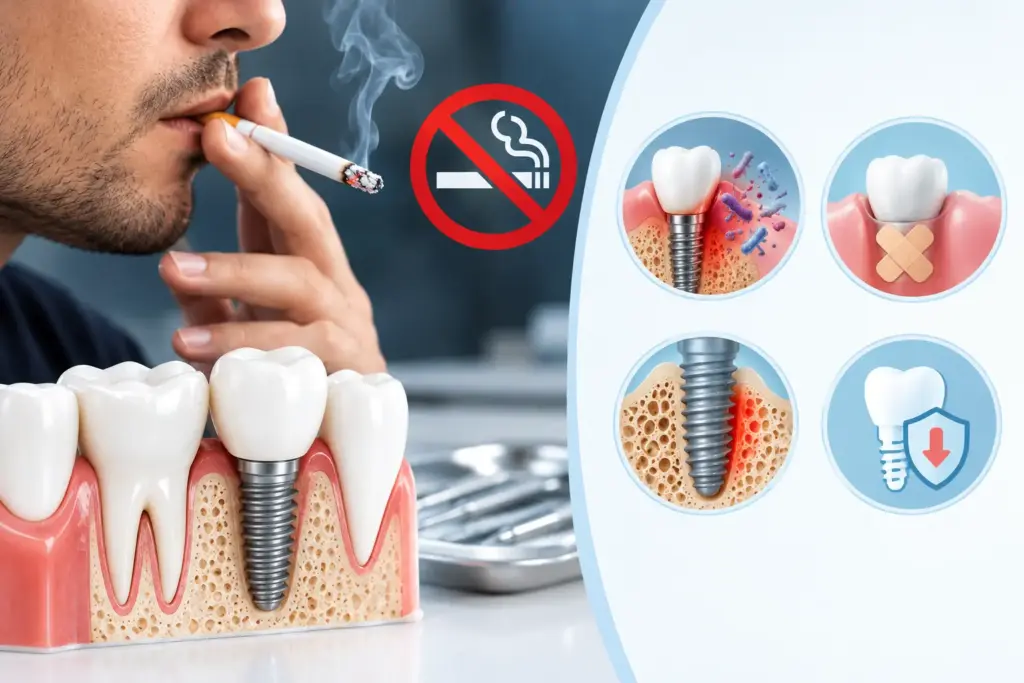
Smoking is one of the clearest predictors of implant failure there is. Blood supply to the site drops, the bone around the post can’t fuse the way it should, and healing doesn’t just slow it stalls in ways that create a long window for things to go wrong. Peri-implantitis hits smokers earlier and harder. And the numbers back that up: failure rates run 2–3x higher compared to non-smokers. Not a small gap.
According to Dr. Namratha Chandrahari, dental implants in Banjara Hills, “patients who smoke heavily without a pre-surgical cessation period show significantly poorer bone integration in the first three months post-placement.”
Worried your smoking history could affect your implant outcome?
Inquire NowHow Does Bicortical Stability Work in Basal Implants?
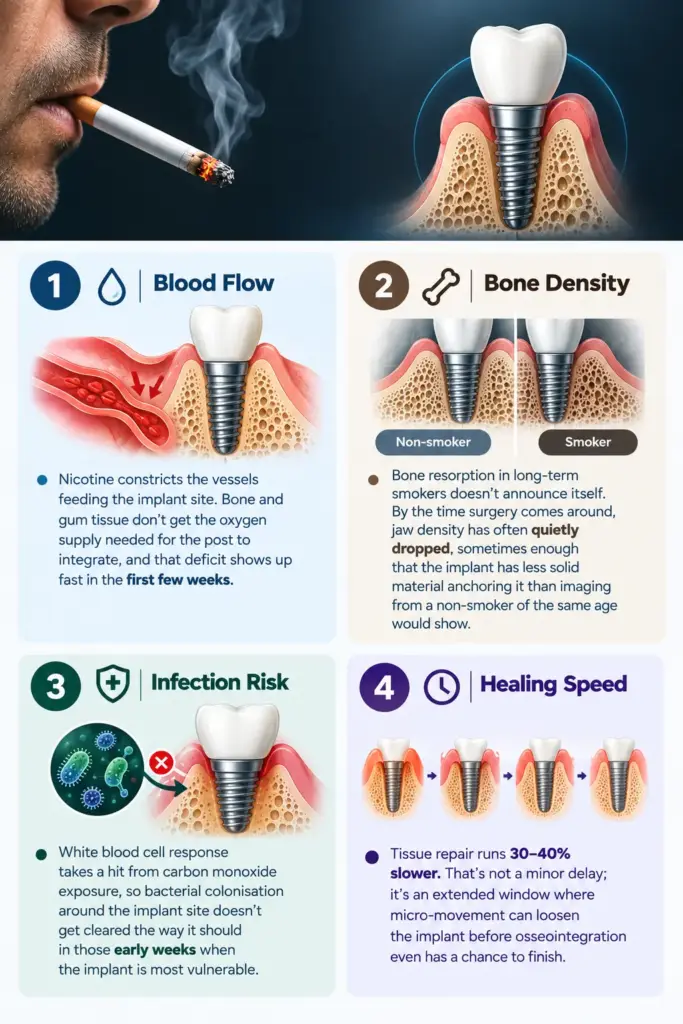
Peri-implantitis moves faster in smokers and responds worse to treatment. It’s the leading long-term reason All-on-4 implants fail in this group, not just a risk to note and move on from.
What Should Smokers Do Before Booking a Dental Implant Procedure?
The prep work for a smoker isn’t the same as for someone who’s never touched tobacco. There’s more to cover, and the timeline is longer.
- Cessation Window: Two weeks before surgery is the floor, not the goal for full mouth reconstruction or pterygoid implants; three months off nicotine is where most implantologists want to be, because shorter gaps don’t restore vascular function to a point where tissue can actually support what’s being placed.
- Bone Assessment: A CBCT scan before any planning starts it tells you where cortical bone is solid and where cancellous density has already dropped, which shapes the whole decision around whether basal implants or conventional placement even makes sense for that patient.
- Gum Evaluation: Any active gum disease has to be treated and cleared first. Smokers carry subclinical inflammation more often than not a quick visual check won’t find it, and starting implant planning on top of untreated periodontal issues is how failures happen.
- Honest History: Vaping counts. So do nicotine pouches and smokeless tobacco. Every source triggers the same vascular response, and leaving any of it out changes the surgical plan in ways that quietly raise risk.
Smokers who complete the full preparation protocol, cessation included, can get to success rates close to non-smokers, even when bone loss is a problem for dental implants. The preparation phase being cut short is what changes those outcomes.
Does Smoking History Affect Which Dental Implant Type Is Right for You?
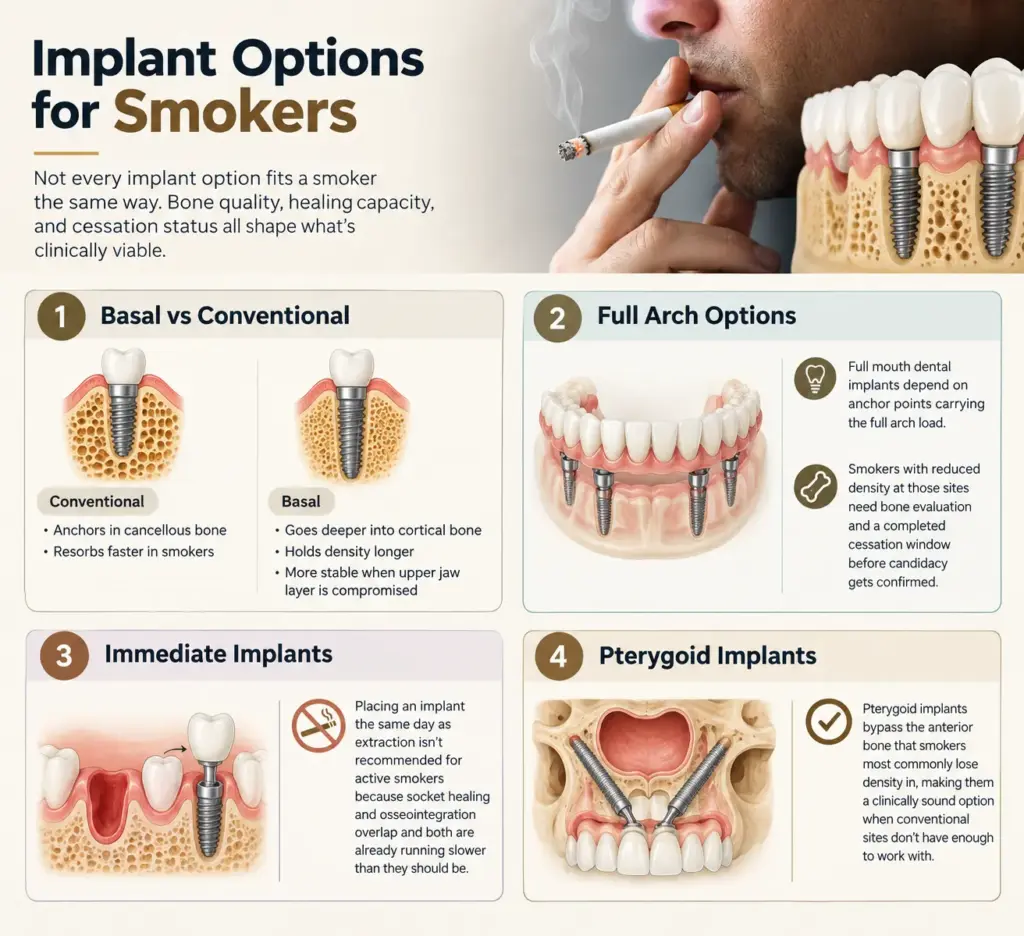
Choosing implants for permanent teeth in Banjara Hills is a bone-map and cessation-status decision for a smoker, not a preference one.
Yes, but stopping before and after surgery cuts failure risk significantly.
At minimum, 2 weeks before and 8 weeks after placement.
It does; nicotine from vaping restricts blood flow the same way cigarettes do.
Not guaranteed, but failure risk runs 2–3x higher than in non-smokers.
References
- Smoking and Dental Implants: A Systematic Review and Meta-Analysis
- Tobacco Use and Periodontal Disease WHO Oral Health
Disclaimer
This content is for informational purposes only and does not constitute medical advice. Please consult a qualified dental professional for personalised diagnosis and treatment recommendations.