
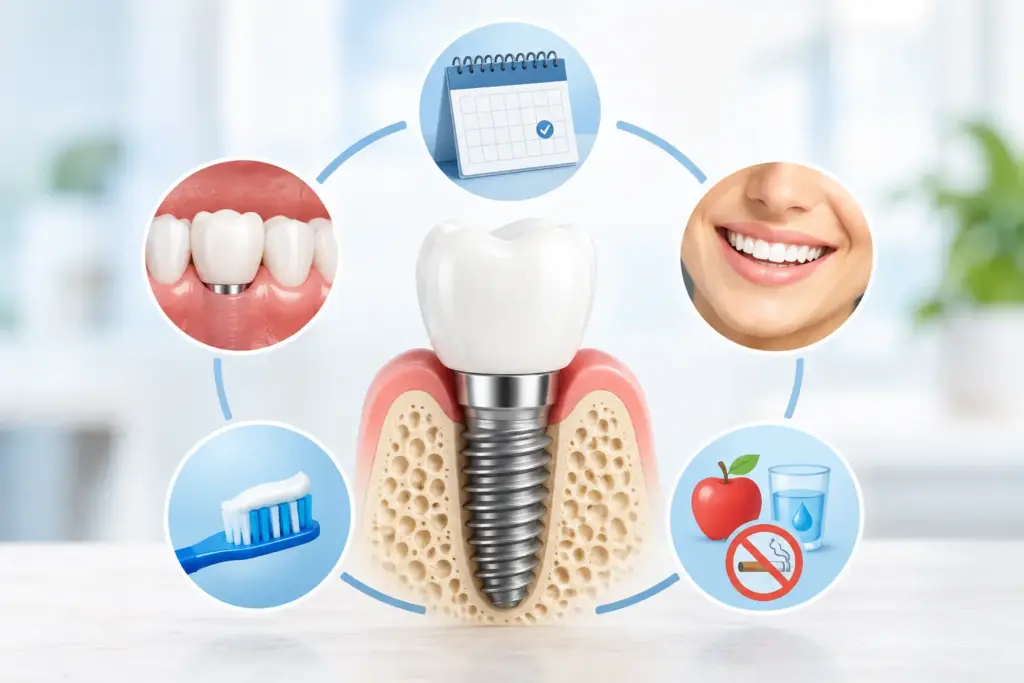
Dental implants can last 20 to 25 years or longer, with long-term studies showing survival rates above 90 percent even two decades after placement. The implant fixture itself, a titanium or zirconia post fused to the jawbone, rarely wears out, but the crown attached to it typically needs replacement or repair every 10 to 15 years due to normal chewing wear. Longevity depends less on the implant brand and more on bone health, hygiene, and how bite forces are distributed across the arch.
According to Dr. Namratha Chandrahari, Implantologist in Banjara Hills, “An implant placed with the right angle and enough bone support around it rarely fails on its own, most problems trace back to gum inflammation or an untreated bite issue years later.”
Wondering if your existing implants are still on track after all these years?
Book AppointmentWhat Determines How Long a Dental Implant Lasts?
A few structural and biological factors decide whether an implant lasts a decade or a lifetime.
Bone Support: Adequate bone density around the implant keeps it mechanically stable over decades, and thin or resorbed ridges are the most common reason implants loosen years down the line.
Crown Material: Zirconia crowns resist wear and chipping far better than older metal-ceramic options, so the visible part of the implant often needs less intervention over time.
Bite Forces: An implant carrying uneven bite forces develops stress at the bone interface faster than one placed with a balanced occlusion, this is something a good implantologist checks and adjusts at every follow-up.
Peri-Implant Health: Gum tissue around the implant can develop inflammation just like natural teeth, and untreated peri-implantitis is the single biggest cause of implant loss after the first year.
Most long-term implant studies point to the same conclusion: implants placed correctly and maintained well can genuinely outlast most other dental restorations. For patients missing multiple teeth, this durability is exactly what makes full mouth reconstruction with implants a long-term investment rather than a repeat expense.
How Can You Make Dental Implants Last Longer?
Longevity isn’t just about the implant, it’s about what happens after placement.
Daily Cleaning: Brushing around the implant collar and flossing or using interdental brushes daily prevents the plaque buildup that leads to peri-implantitis down the road.
Regular Checkups: Six-monthly visits let early bone loss or loose components get caught before they become implant-threatening, and this single habit is probably the cheapest insurance an implant patient has.
Night Guards: Patients who grind their teeth put repeated overload on the implant-bone interface, so a night guard is often the one thing standing between a 10-year implant and a 25-year one.
Bone Preservation: Techniques like implants without bone graft or timely sinus lifts help preserve the surrounding bone quality that the implant depends on for the long haul.
None of these habits are complicated, but skipping them is where most avoidable implant failures actually come from. The daily side of this is covered in more detail in this guide on brushing with dental implants.
Why Choose Dr. Namratha Chandrahari?
Dr. Namratha Chandrahari is a UK-trained Prosthodontist and Implantologist, certified by ICOI USA and Nobel Biocare for zygomatic implants, with over 12 years of experience planning implant cases built to last rather than just placed and forgotten.
Patients who return years later with a loose crown or early bone loss are treated as a maintenance case, not a redo, and most keep their original implant fixture intact for decades with the right adjustments.
Rarely the fixture itself, but crowns need periodic replacement.
Yes, untreated peri-implantitis is a leading cause of failure.
Generally yes, especially with consistent hygiene and checkups.
Yes, it reduces bone healing and increases failure risk.
References
- Kupka JR, et al. How far can we go? A 20-year meta-analysis of dental implant survival rates. National Center for Biotechnology Information.
- Dental implant survival and marginal bone loss after a minimum of 20 years: systematic review and meta-analysis. PubMed.
Disclaimer
This content is for informational purposes only and does not constitute medical advice. Please consult a qualified dental professional for personalised diagnosis and treatment recommendations.